

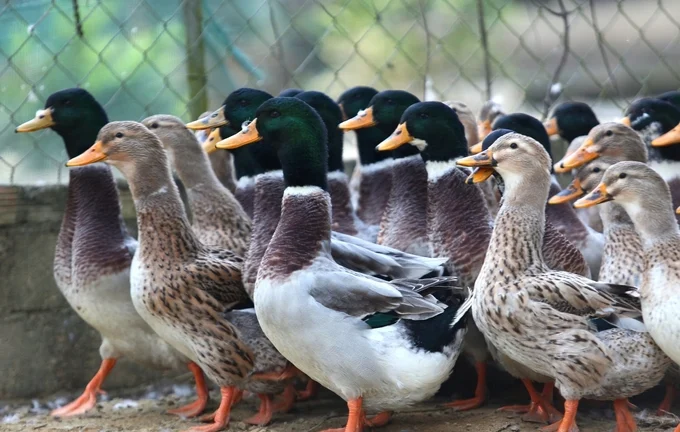
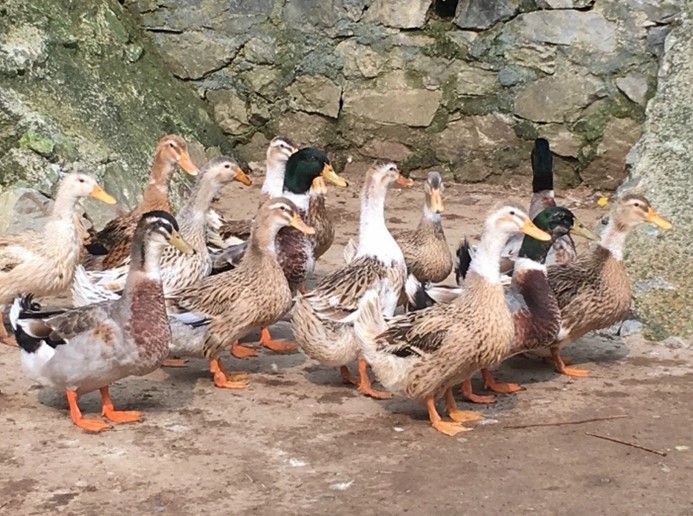
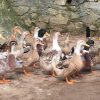
The Green-necked Muscovy Duck is a valuable native Vietnamese duck breed, renowned for its delicious, firm meat and is currently a protected geographical indication specialty product in several localities.
Identifying Characteristics
Below are typical physical characteristics according to information from the Intellectual Property Office and breeding sources:
- Neck Feathers: The most distinctive feature is the male\’s head and neck feathers, which are a very characteristic iridescent green (blue-green) color.
- Body Shape: Round body, broad chest, heavy but sturdy gait.
- Size: Thick and short neck; small, short legs (leg height approximately 5.8 – 7.8 cm).
- Behavior: Adapts well to natural grazing conditions in stream areas and has high disease resistance.
Origin and Distribution
This duck breed is commonly raised in the northern and central mountainous provinces, including the following key areas:
- Bac Kan: This is the most famous locality for the Bac Kan Green-necked Muscovy Duck brand, which was granted Geographical Indication certification in 2023.
- Yen Bai: The green-necked Muscovy duck breed in Lam Thuong commune (Luc Yen district) is also a famous specialty thanks to its free-range farming method in natural streams.
- Son La: Areas such as Chieng La and Muong Lan are strongly developing the green-necked Muscovy duck farming model to generate wealth.
- Nghe An: The Quy Muscovy Duck (Que Phong) also has similar characteristics and is considered one of the best-tasting duck breeds in Vietnam.
Economic and Culinary Value
- OCOP Product: In many localities, the green-necked Muscovy duck has been recognized as a distinctive OCOP (One Commune One Product) product, contributing to sustainable economic development for people in mountainous areas.
- Meat Quality: According to assessments from restaurants and consumers, the duck meat is fragrant, sweet, firm, and less fatty compared to industrially raised duck breeds.
Related products
Foods
Animal Breed
Foods
Animal Breed
Animal Breed
Animal Breed
Animal Breed
Foods