

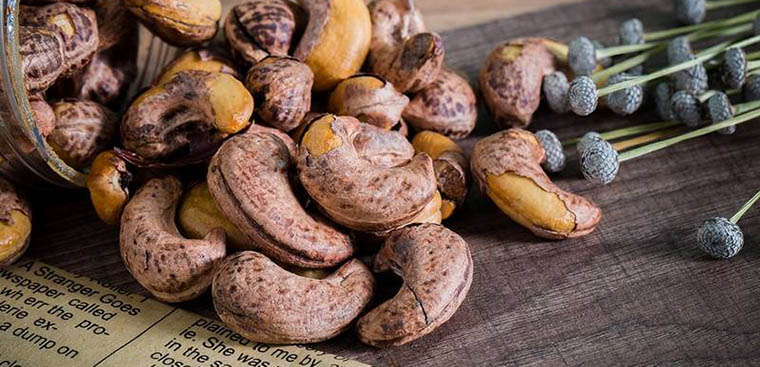
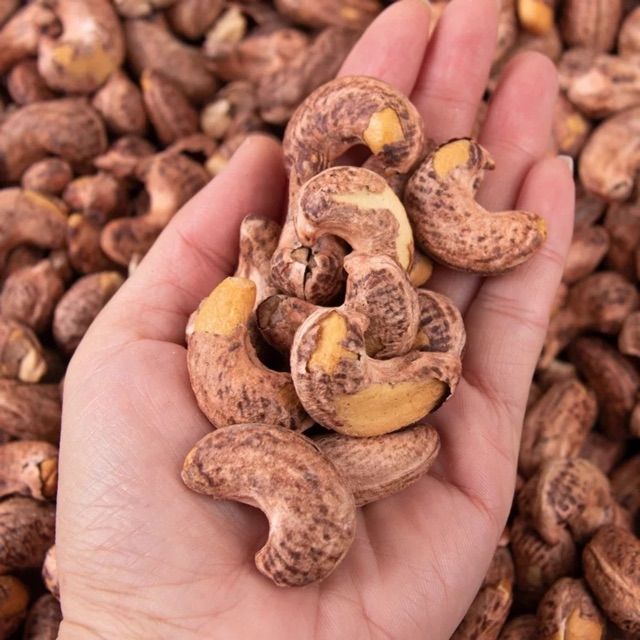



Cashews are a popular and nutritious nut, loved for their rich, buttery flavor and numerous health benefits.
Health Benefits and Nutrition
- Cashews are rich in protein, healthy unsaturated fats, vitamins, and minerals, providing abundant energy for the body.
- Supports cardiovascular health: Contains omega-3 and omega-6 fatty acids, which help improve cardiovascular health.
- Rich in antioxidants: Helps protect cells from damage caused by free radicals.
- Good for bones: A rich source of magnesium and copper, essential for strong bones.
- Weight control: High protein and fiber content helps create a feeling of fullness, supporting weight management.
Common types and preparation methods
Cashews can be prepared in many different ways, to suit various preferences.
- Salted roasted cashews: This is the most popular preparation method, with a mildly salty taste and characteristic crunchy texture.
- Cashews roasted over a wood fire: Offers a traditional flavor, often hand-shelled to preserve the shape of the kernel.
- Flavored cashews: Includes varieties such as honey cashews and garlic-chili roasted cashews, offering diverse flavors.
- Fresh cashews: Raw, shelled kernels, can be used to make cashew milk, baked goods, or in cooking.
How to Use and Precautions
- Cashews can be eaten directly as a snack or used as an ingredient in various dishes.
- Dosage: You should not eat more than 100 grams of cashews per day and should divide them into smaller portions (about 7-10 cashews per serving) to avoid internal heat or indigestion.
- Storage: Cashews should be stored in a dry, cool place, away from direct sunlight. Do not use if the product shows signs of mold or has an unusual smell.
- Time: Eating cashews as a snack (e.g., in the afternoon) can help optimize nutrient absorption.
- Combinations: Cashews should not be paired with certain foods high in tannins or phytic acid, as this can affect nutrient absorption.
Related products
Agricultural Products
Agricultural Products
Agricultural Products
Agricultural Products

Seedlings

Seedlings
Agricultural Products
Agricultural Products